Case Study

Revitalizing EOS: from a neglected protocol to an independent engineering ecosystem
How do you restore momentum to a technology ecosystem when its original developer has stepped away, its infrastructure is aging, and its funding mechanisms struggle to produce meaningful technical progress? As the foundation's founding product manager, I partnered with leadership to help shape a new approach: establishing internal engineering capabilities, improving how technical investments were evaluated and delivered, and coordinating the transition to an independently maintained blockchain protocol.
- Organization
- EOS Network Foundation (later Vaulta Foundation)
- Timeframe
- Q1 2022 – November 2025
- Role
- Lead Product Manager
6
Senior engineers
The initial internal engineering team the product and delivery practices were built around.
2022
Protocol independence
Coordinated hard fork to Antelope Leap 3.1, completed by block producers in September.
3+ yrs
Product leadership
Founding product manager through to November 2025, across strategy, planning, and delivery.
My role
- ·Co-developed the shift toward internal engineering and adaptive external investment.
- ·Established product planning, prioritization, and engineering delivery practices.
- ·Personally created and maintained the organization-wide roadmaps.
- ·Coordinated the release and stakeholder processes behind the independent protocol transition.
One focused account of organizational and ecosystem transformation, centred on 2022 and the capabilities that evolved afterward. It is not a comprehensive record of every initiative across the full tenure.
The challenge
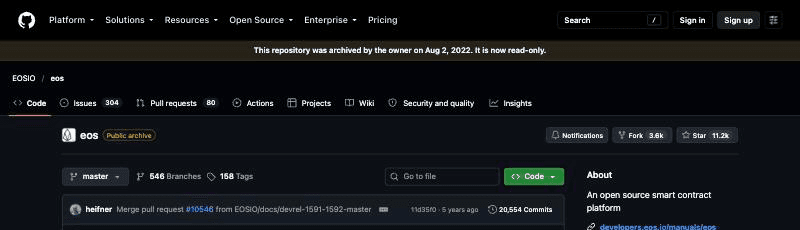
EOS had launched with ambitious technical capabilities, but its underlying software and developer ecosystem had suffered from declining support. The original codebase maintainer, Block.one, had largely withdrawn from active protocol development. Critical infrastructure needed modernization, developer tooling and documentation were insufficient, and the community lacked confidence in the long-term direction of the technology.
The newly established EOS Network Foundation initially approached these problems primarily through funding. It commissioned research and technical blue papers to identify ecosystem deficiencies and investment opportunities. But identifying valuable work proved easier than finding qualified teams capable of delivering it.
The foundation had financial resources and an emerging strategic mandate, but limited internal capacity to execute its highest-priority technical initiatives. The challenge was not simply deciding what to build. It was creating a sustainable system for deciding, funding, building, and maintaining the technology on which the ecosystem depended.
Approach
Strategy
Rethinking how the ecosystem builds
When I joined in early 2022, leadership had already begun moving toward an internal engineering organization. I worked alongside them to shape how that transition would function and how it could address the ecosystem's broader needs.
An important part of my work involved translating research and investment recommendations into executable initiatives. I evaluated responses to requests for proposals, worked with prospective delivery teams to refine their submissions, and advised the stakeholders responsible for funding decisions. I was not the funding authority; those calls were made collaboratively. Once projects were approved, I participated in progressive acceptance and delivery oversight to help ensure the resulting work met its intended objectives.
This process exposed a recurring limitation: funding alone could not guarantee access to the specialized expertise required for complex blockchain infrastructure. We consequently evolved a more flexible approach to technical investment. Core protocol maintenance and selected developer tools increasingly became internal responsibilities, while applications and broader ecosystem utilities could still be developed by external teams through grants and partnerships.
The boundary was deliberately adaptive. As projects progressed, we reassessed delivery risk, technical complexity, and available capabilities rather than treating the original funding arrangement as permanent. In subsequent initiatives, including EOS EVM and instant-finality development, this sometimes meant transitioning responsibility from external contributors to the internal engineering organization while preserving valuable expertise and collaboration. The objective was not to replace external development. It was to build an ecosystem capable of reliably delivering its most important technical priorities.
Organizational design
Building the engineering operating model
Alongside six senior blockchain engineers, I helped establish the product and delivery capabilities of the foundation's new engineering organization. As founding product manager, my responsibility extended beyond maintaining a backlog or translating requirements. I developed an interconnected operating model covering:
- ·Product strategy and prioritization. Roadmaps, initiative evaluation, project scoping, and allocation of engineering attention.
- ·Engineering delivery. Project boards, initiative tracking, backport coordination, and release planning.
- ·Quality and assurance. Security audit relationships, release documentation, and coordination around technical readiness.
- ·Ecosystem engagement. Block producer and developer roundtables, public roadmap communications, and feedback channels for community contributors.
- ·External coordination. Communications with block producers, exchanges, and technical partners preparing for network upgrades.
Transparency
Owning the organization-wide roadmap
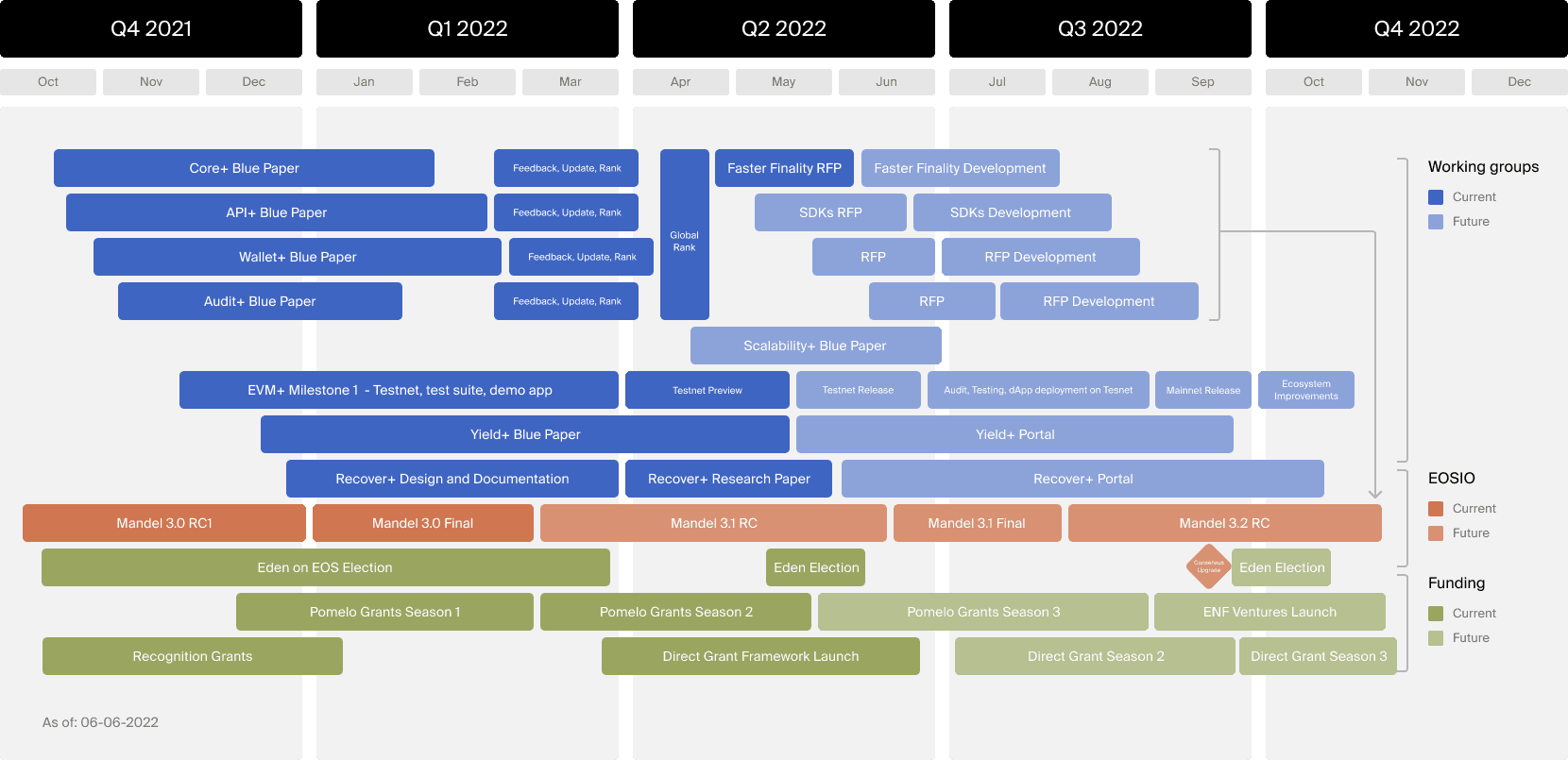
I took ownership of the foundation's organization-wide roadmapping practice, creating and maintaining its roadmaps throughout my tenure. These artifacts brought together protocol engineering, technical working groups, ecosystem initiatives, and funding programs into a shared view of organizational priorities, dependencies, and timelines.
Building on an earlier roadmap initiative, I developed the planning and communication approach as the foundation expanded its internal engineering capabilities and ecosystem development efforts.
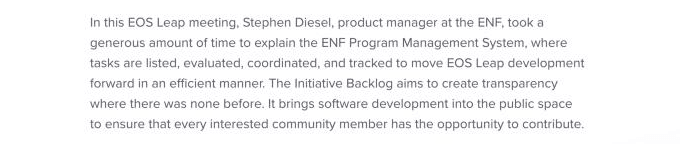
Public GitHub initiative backlogs and regularly updated roadmaps helped make technical work more transparent and provided ways for developers and ecosystem participants to contribute feedback. The resulting organization was not simply a new team of engineers. It had a framework for making decisions, managing dependencies, coordinating releases, and communicating its work across a decentralized network.
Execution
Establishing technical independence
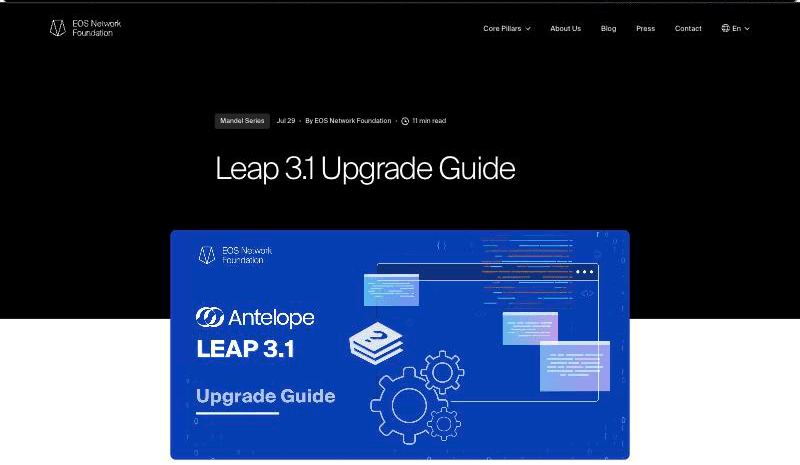
The first major test of this operating model was the development and release of an independently maintained EOS protocol implementation. The engineering effort began with an established EOSIO codebase, incorporating selected fixes and improvements from other versions while preparing a new release under the Antelope Leap framework.
Executing the transition required substantially more than publishing software. The team needed to align engineering scope, coordinate backports and security assurance, prepare release candidates, communicate upgrade requirements, and ensure that independent network operators understood how and when to migrate. I helped develop the release and migration plan and coordinated across internal engineers, external technical partners, block producers, and exchanges.
On September 21, 2022, EOS block producers completed the coordinated hard fork to Antelope Leap 3.1. The milestone established the network's independence from its original protocol maintainer and demonstrated that the new engineering organization and broader ecosystem could collectively deliver a critical infrastructure upgrade.
Outcomes
Independent protocol stewardship
EOS transitioned to an independently maintained codebase, reducing reliance on the original software provider.
An established engineering organization
The foundation developed internal technical capabilities supported by repeatable product, planning, delivery, and release-management practices.
A more adaptive investment model
Technical initiatives could be funded externally, built internally, or transitioned between delivery models as organizational capabilities and project risks evolved.
Greater ecosystem transparency
Public roadmaps, initiative backlogs, release communications, and recurring stakeholder forums gave developers and network participants clearer visibility into ongoing work.
Renewed development momentum
Subsequent protocol releases, developer tooling, and ecosystem initiatives contributed to a more active development environment.
“No drama, no friction, just clarity and forward motion.”
In their words
Stephen came into Vaulta during a fundamental shift: the decision to move from funding ecosystem development to building the product ourselves. We were moving into new territory.
That meant building the product, program, and engineering processes from scratch: how to define ownership, gather inputs from across the organization, sequence priorities, and create a delivery model that could actually ship. He built all of that while we were already in motion. No drama, no friction, just clarity and forward motion.
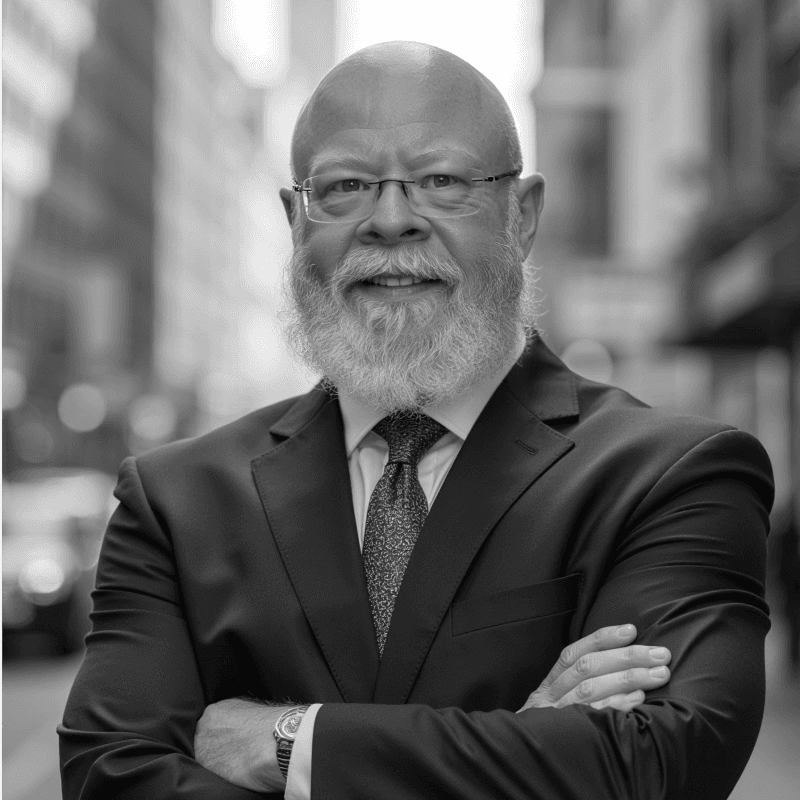
Ted Cahall
Former CVP, Microsoft · 4x COO
What it taught me
- ·Ecosystem revitalization requires more than capital, technical talent, or a compelling roadmap. It requires an operating model that connects strategic priorities to delivery capabilities, and enough flexibility to change that model as the organization learns.
- ·My contribution was helping build that connection: turning ecosystem research and investment priorities into an actionable engineering strategy, establishing the systems needed to execute it, and coordinating stakeholders around the shared objective of long-term technical independence.
Building something complex?
I help teams turn strategic ambition into the structures, decisions, and delivery practices needed to make progress.