Case Study
Voice: launching a social network, then leading its pivot to NFTs
Block.one set out to build a social network on its own blockchain. I helped incubate it, rescoped it so the beta shipped in February 2020, organised a fast-growing engineering group into pods, and later proposed and led the product side of its pivot to an NFT marketplace for creators.
- Organization
- Voice (Block.one)
- Timeframe
- September 2019 – August 2021
- Role
- Product Manager / Technologist, then product leadership for the NFT pivot
Feb 2020
Beta shipped
After rescoping the launch: a private network, simpler onboarding, a lighter editor, web first.
~3x
Monthly active users
During the invite-only NFT beta, with the community carried over from the social app.
SA+
NFT standard
Voice's own NFT data standard: editions, flexible metadata, and royalties on resale.
My role
- ·Incubated Voice inside Block.one, building the table-stakes social features.
- ·Rescoped the launch: private network, simpler identity-checked onboarding, a lighter editor, web first.
- ·Organised the engineering group into capability pods and dedicated mobile teams.
- ·Proposed the pivot to NFTs to executive leadership, and led the product side of it.
- ·Designed the minting flows and the NFT data standard, and owned the payment rails, including stablecoins.
The challenge
Block.one, the company behind the EOSIO blockchain software, set out to build a social network where people owned their content and were rewarded for it. It announced Voice in June 2019 and later put $150 million behind it. I started on Voice in September 2019, while it was still being incubated inside Block.one, and moved with it as it became its own company.
The launch date had already slipped. The product was trying to be a social network, an identity system, a token economy, and a publishing tool that would beat Medium, all at once. And the engineering group was growing fast, inheriting people from Block.one, without a structure to absorb them.
Approach
Incubation
Building the table stakes
Inside Block.one, I worked on the core of the product before it had a team of its own: posting, profiles, onboarding, and notifications, the features any social network needs before anything else matters.
Launch
Rescoping to ship
The plan I inherited had launch much further out. I rescoped it around four decisions:
- ·Network. A private instance of the network instead of the public mainnet, which also gave us room to design governance and trust and safety into the contract layer.
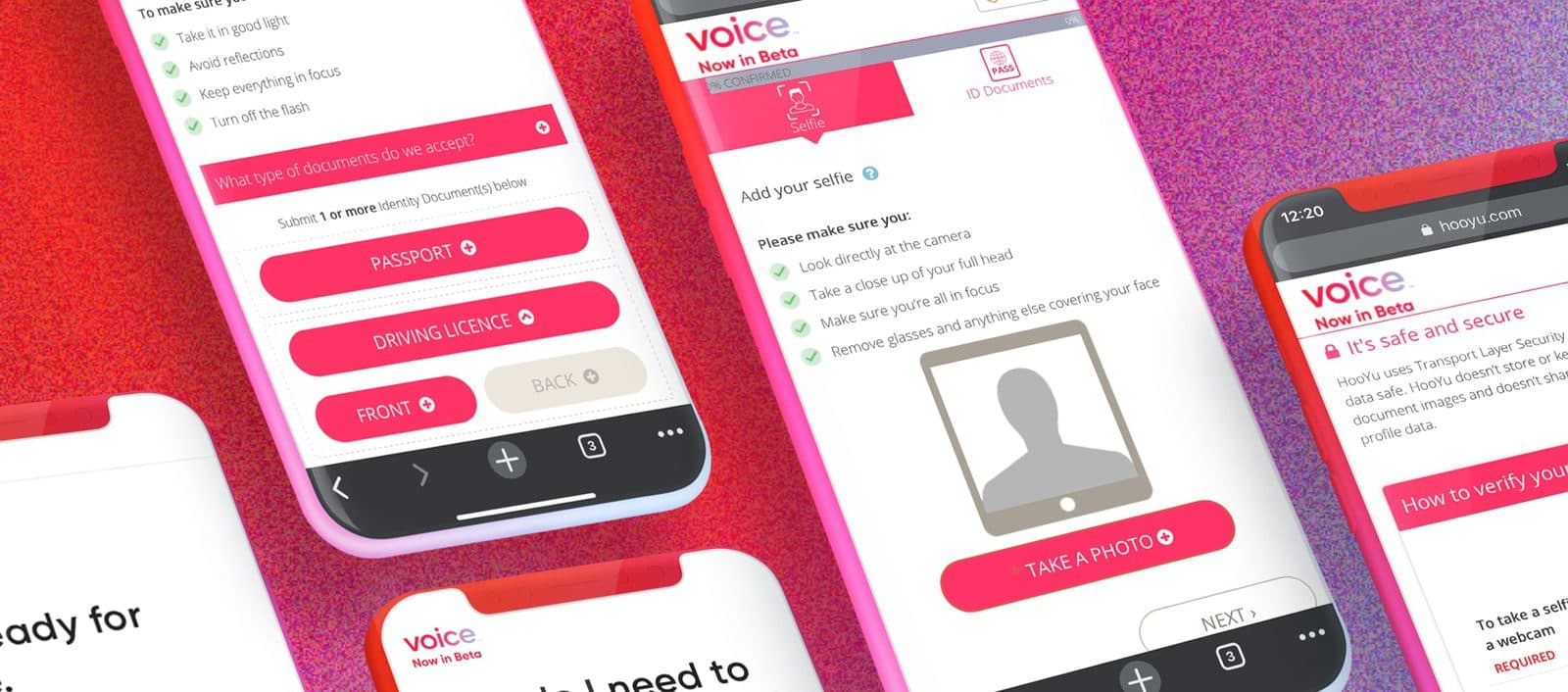
- ·Onboarding. Voice was one of the first social products on a blockchain with identity verification built into sign-up. We cut the steps to what launch needed.
- ·Editor. We had been building a publishing editor meant to beat Medium, on an editor library that kept breaking. We shipped a much simpler one.
- ·Platform. Web first, mobile after.
Shipped
Beta in February, public in July
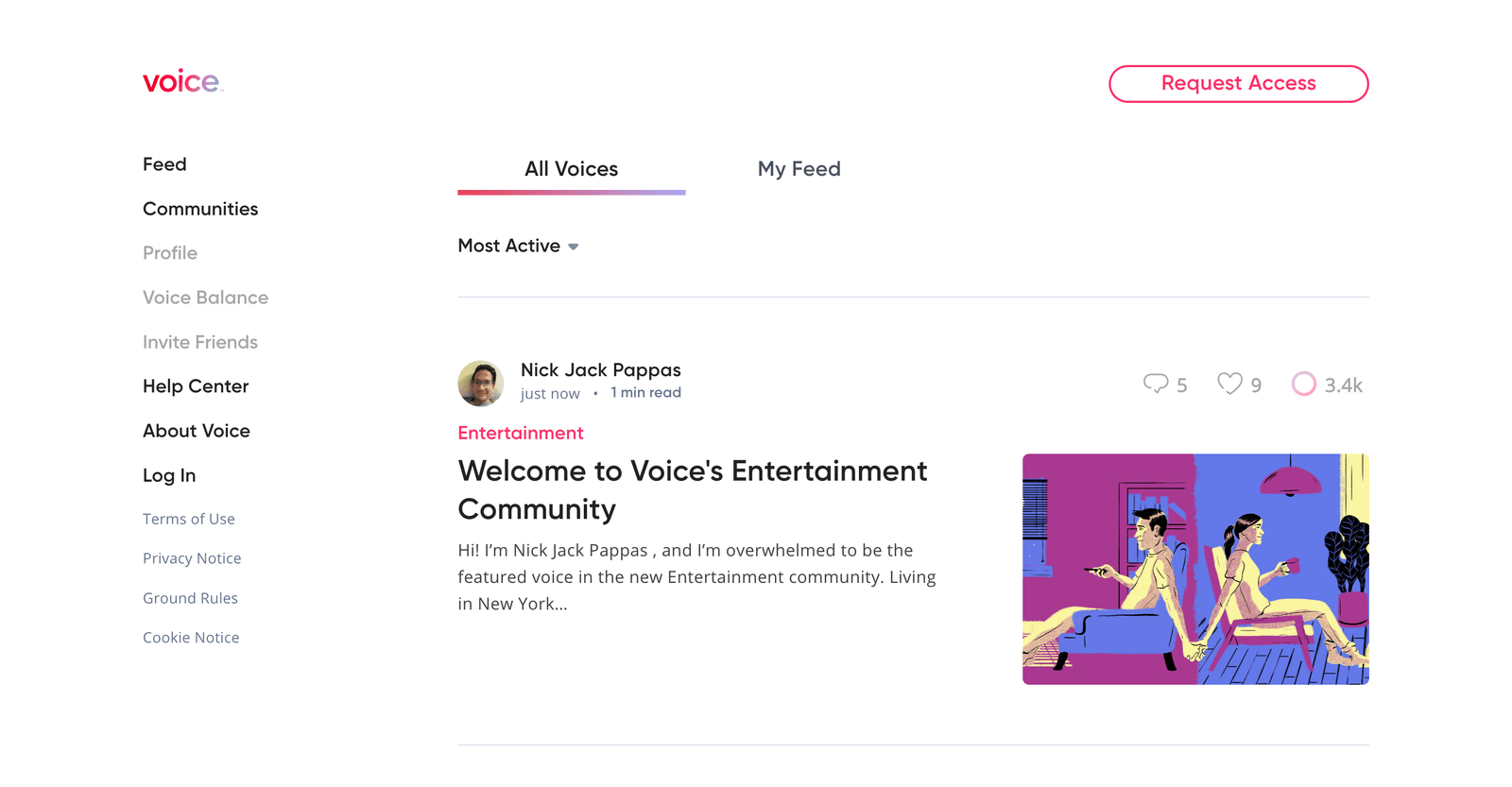
The invite-only beta shipped on 14 February 2020, about seven months ahead of the plan at the time: identity-checked sign-up, trust and safety in the contract layer, posting, profiles, and notifications, all on chain on a private test network. The public launch followed in July 2020, ahead of its announced date.
Teams
Pods around capabilities
Voice started with two engineering teams of about twelve each. As it inherited engineers from Block.one, I split out dedicated mobile teams and organised the rest into pods around capabilities: posting, the core platform, the feed, and search and discovery. Each pod owned its area end to end, so the group could grow without every decision running through the same two teams.
Pivot
Seeing where creators were going
By early 2021 the product was fishtailing, and the Voice token it had been built around could not launch for regulatory reasons. I was spending a lot of time in Ethereum creator communities, including Friends with Benefits and SquiggleDAO, and won a place to publish on Mirror through its $WRITE race. I could see where creators' attention and money were moving.
I proposed to executive leadership that posts on Voice could become NFTs, and that EOSIO could support a richer kind of NFT than most chains offered at the time. I was the strongest voice in the room for it, and it became the direction. The pivot came with a restructuring: I stepped up into product leadership, shaped the vision for the marketplace alongside the CEO, and reorganised the teams around what was net new, the blockchain components and the creation flows.
Standard
A richer NFT, on chain
We built on Simple Assets, an existing NFT standard in the EOSIO ecosystem, and extended it into Voice's own standard, Simple Assets Plus. It separated mutable from immutable data, supported multi-edition and series runs, carried flexible metadata, and split royalties on future sales, with more of it on chain than most NFT implementations of the time.
Creation
Minting, bidding, and paying
I designed the minting flows step by step: every field, the file formats creators could use, and how a work was framed on its page, whether an article or a piece of art. I also owned bidding and the payment rails. In place of the Voice token, the marketplace took stablecoins: we were early partners with Circle and accepted USDC directly on our network, alongside card payments.
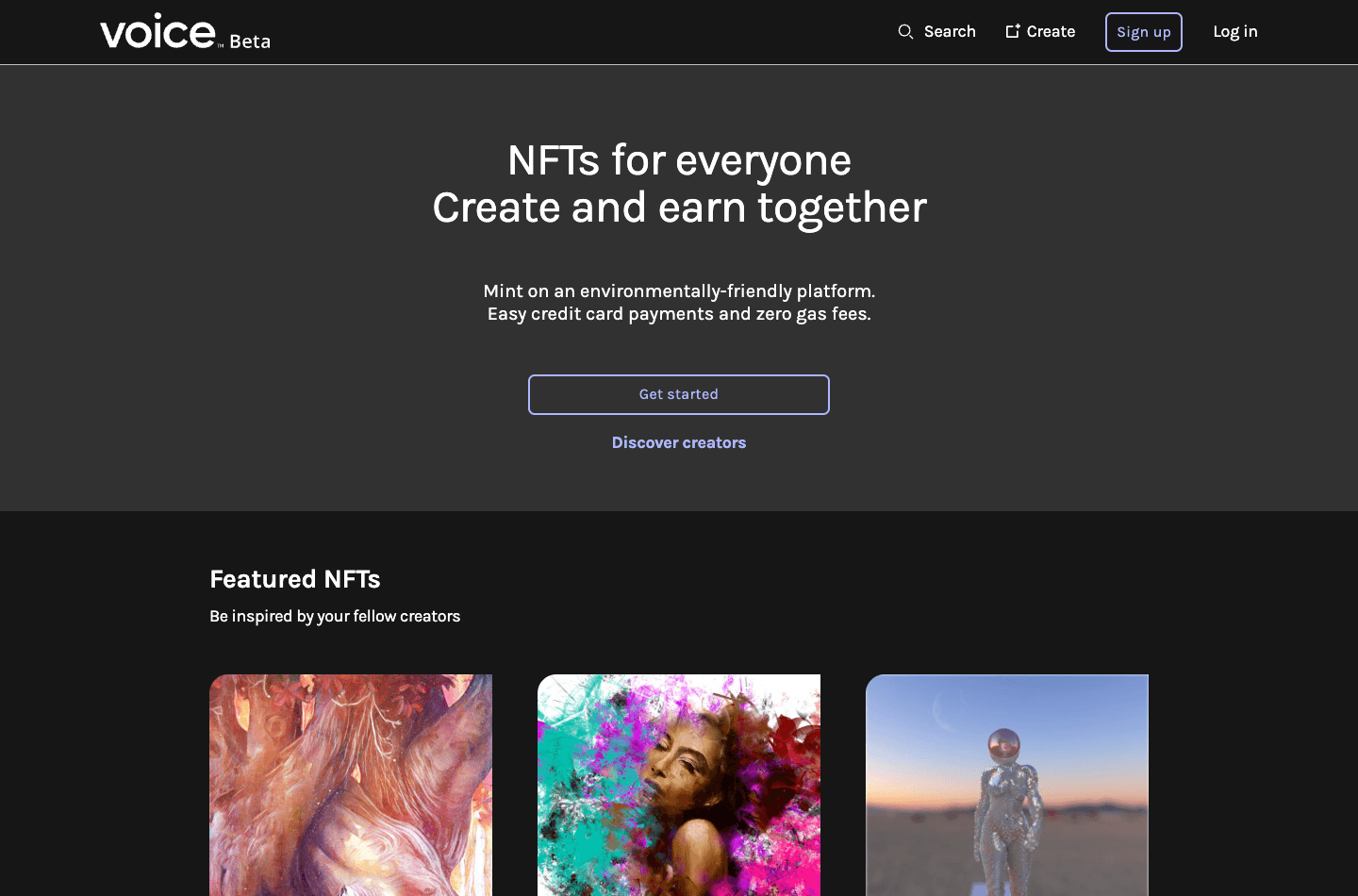
We opened the NFT product as an invite-only beta to the community we had kept from the social app. Sign-ups rose sharply, monthly active users roughly tripled, and posting, minting, and bidding all took off with them.
Outcomes
A beta in February 2020 and a public launch ahead of schedule
Rescoping around the network, onboarding, the editor, and web first got the product out instead of further delayed.
An engineering group organised to grow
Capability pods and dedicated mobile teams absorbed the engineers coming over from Block.one.
~3x
Monthly active users in the invite-only NFT beta
With the community carried over from the social app, as posting, minting, and bidding took off.
A pivot with a product behind it
An NFT standard, minting and bidding flows, and stablecoin payment rails, designed for creators rather than collectors.
Where Voice went next
In August 2021 I left to help build a new bank. Voice opened its NFT marketplace to the public that September, and wound down in 2023.
“He can hold the structural and human dimensions at the same time.”
In their words
Voice went through major organizational change in a compressed period: a full restructuring into engineering pods, leadership turnover at the executive level, and a strategic pivot that reoriented what we were building. My engineering team felt all of it.
When structure, leadership, and product direction are all shifting, engineers lose their footing. They need to know what they're building toward and why it matters. Stephen gave us that.
He led the operating model redesign, guided the leadership transitions, and identified the strategic direction that drove the pivot. My team stayed effective through every one of those changes. He can hold the structural and human dimensions at the same time. That's what makes the change stick.

Brian Walter
VP Engineering, Voice
What it taught me
- ·Shipping on time is usually a scoping decision, not an effort decision. The private network, the simpler editor, and web first did more for the date than any amount of pushing.
- ·Pivots start outside the building. I saw where NFTs were going because I was in those communities as a participant, not as an observer.
- ·When a company restructures, the people who stay need to know what they're building toward. Teams organised around capabilities made the new direction legible.
Building something complex?
I help teams turn strategic ambition into the structures, decisions, and delivery practices needed to make progress.